
Proofs for the Existence of God
The Teleological Argument
The Teleological Argument or proof for the existence of a deity is sometimes called the Design argument. Even if you have never heard of either argument, you are probably familiar with the central idea of the argument, i.e. there exists so much intricate detail, design , and purpose in the world that we must suppose a creator. All of the sophistication and incredible detail we observe in nature could not have occurred by chance.
When looking at the universe people might see more order or disorder as is their predilection and they might see it in varying proportions. When examining the universe and seeing complexity and order there are a variety of explanations for how it may have come about. Some people want an explanation backed by evidence and without violations of reasoning and some do not want such explanations. Some want the easiest explanations with the least amount of thought. Some merely accept the explanations that they have received when growing up.
VIEW: Teleological Argument http://youtu.be/_7sAvxm408U
The Teleological Argument is the second traditional "a posteriori" argument for the existence of God. Perhaps the most famous variant of this argument is the William Paley's "watch" argument. Basically, this argument says that after seeing a watch, with all its intricate parts, which work together in a precise fashion to keep time, one must deduce that this piece of machinery has a creator, since it is far too complex to have simply come into being by some other means, such as evolution. The skeleton of the argument is as follows:
1. Human artifacts are products of intelligent design; they have a purpose.
2. The universe resembles these human artifacts.
3. Therefore: It is probable that the universe is a product of intelligent design, and has a purpose.
4. However, the universe is vastly more complex and gigantic than a human artifact is.
5. Therefore: There is probably a powerful and vastly intelligent designer who created the universe.
Paley's Teleological Argument For The Existence Of God
"For what can be known about God is plain to them, because God has shown it to them. Ever since the creation of the world his invisible nature, namely, his eternal power and diety, has been clearly percieved in the things that have been made. So they are without excuse." Romans1:19-20
I.) The Teleological Argument:
"Teleological" = from the end or purpose exhibited by the universe
The term teleological comes from the Greek words telos and logos. Telos means the goal or end or purpose of a thing while logos means the study of the very nature of a thing. The suffix ology or the study of is also from the noun logos. To understand the logos of a thing means to understand the very why and how of that thing's nature - it is more than just a simple studying of a thing. The teleological argument is an attempt to prove the existence of God that begins with the observation of the purposiveness of nature. The teleological argument moves to the conclusion that there must exist a designer. The inference from design to designer is why the teleological argument is also known as the design argument.
i.) The basic premise, of all teleological arguments for the existence of God, is that the world exhibits an intelligent purpose based on experience from nature such as its order, unity, coherency, design and complexity. Hence, there must be an intelligent designer to account for the observed intelligent purpose and order that we can observe.
ii.)Paley's teleological argument is based on an analogy: Watchmaker is to watch as God is to universe. Just as a watch, with its intelligent design and complex function must have been created by an intelligent maker: a watchmaker, the universe, with all its complexity and greatness, must have been created by an intelligent and powerful creator. Therefore a watchmaker is to watch as God is to universe.
II.) Paley's Teleological Argument:
1.)Human artifacts are products of intelligent design.
2.)The universe resembles human artifacts.
3.)Therefore the universe is a product of intelligent design.
4.)But the universe is complex and gigantic, in comparison to human artifacts.
6.)Therfore, there probably is a powerful and vastly intelligent designer who created the universe.
More on the Argument: http://en.wikipedia.org/wiki/Teleological_argument
CRITICISMS or COUNTER ARGUMENTS
By David Hume:
By David Hume:
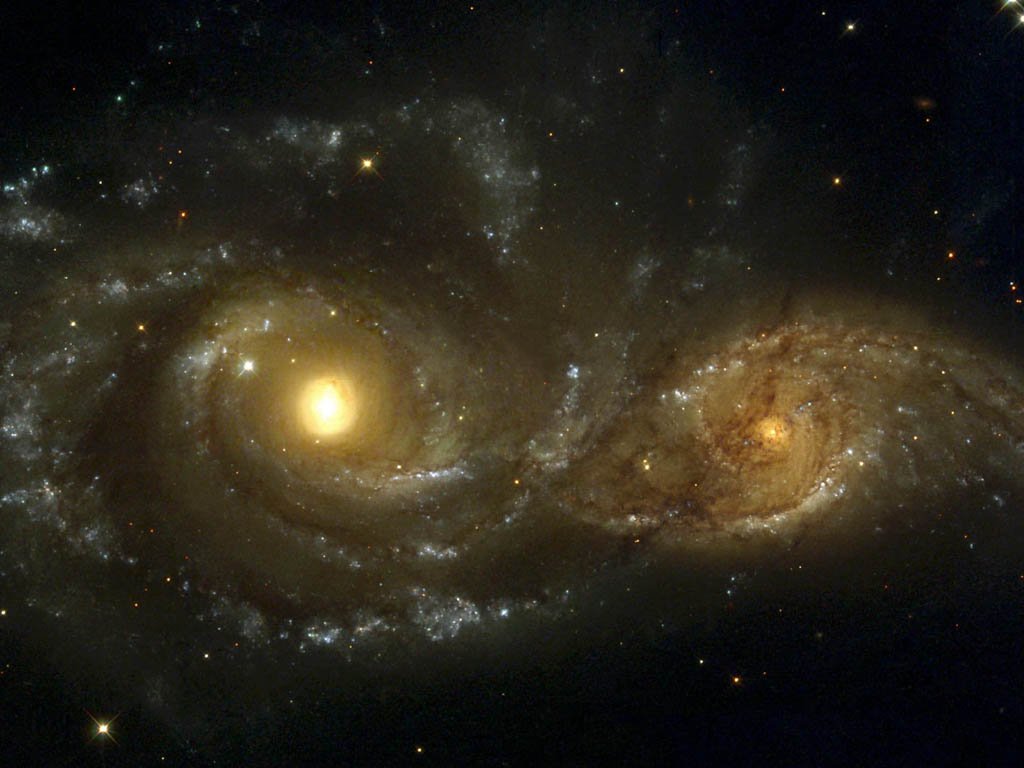
1. The universe does not exhibit that much order as there are many indications of disorder such as the collision of galaxies, black holes, nova and supernova, cosmic radiation, gamma radiation, meteor impacts, volcanoes, earthquakes
2.argument from parts to whole is not valid
3.analogy fails because there are no other universes to compare this one to
4.the argument does not prove the existence of only one ( 1) such god
5.the argument does not prove that the creator is infinite
See this site for counter arguments to creationism:
http://www.religioustolerance.org/evolutio.htm
COUNTER TO THE COUNTER ARGUMENTS:
The teleological argument does prove that the existence of God is PROBABLE but not certain.
READ: Richard Swinburne: The Argument from Design
http://www.mrrena.com/misc/Swinburne.shtml
NOTES ON DAVID HUME:
David Hume, 1711 - 1776, argued against the Design Argument through an examination of the nature of analogy.
Analogy compares two things, and, on the basis of their similarities, allows us to draw conclusions about the objects. The more closely each thing resembles the other, the more accurate the conclusion. Have you ever heard the expression you are comparing apples to oranges? We use the above-mentioned idiom when we want to express the notion that a comparison is not accurate due to that dissimilarity of things under scrutiny. A good analogy will not compare apples to oranges.
Is the universe similar to a created artifact? Are they similar enough to allow for a meaningful analogy. Hume argues that the two are so dissimilar as to disallow analogy. Further, we know so very little about the universe that we can not compare it to any created thing that is within our knowledge. If we want to employ a valid analogy between, say, the building of a house and the building of the universe we must be able to have an understanding of both terms. Since we can not know about the building of the universe a Design Analogy for the existence of God is nothing more than a guess.
Hume's Dialogues Concerning Natural Religion (1779)
Links to websites on David Hume
http://www.mayfieldpub.com/lawhead/chapter4/dhume.htm
Notes on Critiques of this Argument:
David Hume's Critique of the Cosmological Argument by Allan Stairs
See also on the Teleological Argument http://www.manyworldsoflogic.com/teleologicalArgument.html
The Intelligent Design Theory
"Intelligent Design theory is simply a repackaging of the Teleological Argument which Hume repudiated centuries ago." Mark Halfon (NCC, 2005)
In recent years a number of scientists have attempted to supply a variation on the teleological argument that is also a counter to the evolutionary theory. It is called Intelligent Design Theory. This theory disputes that the process of natural selection, the force Darwin suggested drove evolution, is enough to explain the complexity of and within living organisms. This theory holds that the complexity requires the work of an intelligent designer. The designer could be something like the Supreme Being or the Deity of the Scriptures or it could be that life resulted as a consequence of a meteorite from elsewhere in the cosmos, possibly involving extraterrestrial intelligence, or as in new age philosophy that the universe is suffused with a mysterious but inanimate life force from which life results.
One of its weaknesses is that the argument for intelligent design is subject to a great many definitions: what is intelligent design? Opponents of this argument will point out that rather than looking to see if an object looks as if it were designed, we should look at it and determine if its origin could have been natural.
http://www.leaderu.com/offices/dembski/docs/bd-dibook.html
http://www.public.asu.edu/~jmlynch/idt/wedge.html
Here is a website that keeps track of activities in support of intelligent design and creationist claims and offers refutations of them and exposures of the misinformation that is spread by those who are promoting intelligent design/creationist thought.
http://www.csicop.org/intelligentdesignwatch/index.html
"Doesn't the fact that the universe is so well designed mean that it must have had a Designer?" ©2002 Ed Buckner, Council for Secular Humanism, http://secularhumanism.org/index.php?section=columns&page=designer
Well designed compared to what? The universe is terribly complex, vastly interesting, awe-inspiring—but, as far as we can tell, it is the only one. Since we can all imagine a better-designed universe, even though none of us is divine (ask the folks in areas now suffering from floods or from droughts if they couldn't design a better water distribution system about now, or contemplate your own appendix or your poor pet's fleas or West-Nile-virus-bearing mosquitoes), it's a little hard to know if it's "well designed."
And, even if it is, wouldn't a God necessarily be even better designed—so who designed Him, and then who designed that Designer, ad infinitum?
Most people who bring this one up have in mind some variation of a creationist argument in response to Darwin or other evolutionary theorists. The one usually credited with popularizing or developing this version is William Paley, who described it in Natural Theology (1802). Daniel C. Dennett (1995) argues convincingly that Hume anticipated Paley, having Cleanthes, one of his (Hume's) three fictional characters in his Dialogues Concerning Natural Religion (1779/modern reprint, Prometheus Books), lay out the argument
In any case, the real problem is that design and a "Designer" with a purpose are not necessarily connected. The natural forces at work in the universe do change things, and at least in the case of organic matter, those changes are in a particular direction, or directions. But that does not imply purpose or an intentional destination. Organisms with inheritable characteristics that work better in whatever environment they are in are more likely to survive and reproduce—so "Nature," or evolutionary forces, do design organisms that are increasingly well adapted and thus are often increasingly complex. Given a few million generations over a few billion years, such design forces can create an astonishing variety of interesting products—but that in no way suggests an omnipotent, omniscient, purposeful Creator.
Counter argument to the teleological argument based on Complexity or Improbability
The more the complexity of the universe or the improbability of its actual orderings then the less likely it is that it had or has an intelligent designer.
The case made by the promoters of the intelligent design argument is actually providing evidence against the conclusion that there must be an intelligent designer. The more the complexity of the universe is advocated or presented by the promoters of the intelligent design argument as a supposed indication of intelligence at work, then the more it works against the conclusion that there must be an intelligent designer. Why? Because if there was an intelligent designer there would be no need for all the complexity and waste observed in the physical universe.
VIDEOS describing a refutation of the Argument for Intelligent Design based on Irreducible Complexity
http://www.youtube.com/watch?v=W96AJ0ChboU&feature=youtube_gdata_player
http://www.youtube.com/watch?v=As1HlmYeh7Q&feature=youtube_gdata_player
Who Owns the Argument from Improbability? - Richard Dawkins
Free Inquiry October/November 2004 - Volume 24, No. 6
……The design argument is fatally wounded by infinite regress. The more improbable the specified complexity, the more improbable the god capable of designing it. Darwinism comes through the regress unscathed, indeed triumphant. Improbability, the phenomenon we seek to explain, is more or less defines as that which is difficult to explain. It is obviously self-defeating to try to explain it by invoking a creative being of even greater complexity. Darwinism really does explain complexity in terms of something simpler-which in turn is explained in terms of something simpler still, and so on back to the primeval simplicity. It is the gradual escalatory quality of non-random natural selection that arms the Darwinian theory against the menace of infinite regress. …
Design is the temporarily correct explanation for some particular manifestation of specified complexity such as a car or a washing machine. It could conceivably turn out that ….evolution was seeded by deliberate design of...alien designers then they require their own explanation: ultimately, they must have evolved by gradual and , therefore, explicable degrees. The argument from probability, properly applied, rules out their spontaneous existence de novo.……………………………………
Sooner or later we are going to have to terminate the regress with something more explanatory than design itself. Design can never be an ultimate explanation. And-here is the point of my title-the more statistically improbable the specified complexity, the more inadequate does the design theory become, while the explanatory work done by the crane of gradualistic natural selection becomes correspondingly more indispensable. So, all those calculations with which creationists love to browbeat their naïve audiences-the mega astronomical odds against an entity spontaneously coming into existence by chance-turn out to be exercises in eloquently shooting themselves in the foot.
The argument from improbability firmly belongs to the evolutionists. It is our strongest card, and we should instantly turn it against our political opponents (we have no scientific opponents) whenever they try to play it against us.
For much more on the subject, see:
Dennett, Daniel C. Darwin's Dangerous Idea: Evolution and the Meanings of Life, Simon and Schuster, 1995, especially pp. 28-34 and 68-80.
Dawkins, Richard. The Blind Watchmaker: Why the Evidence of Evolution Reveals a Universe Without Design, W.W. Norton & Company, 1996.
Hume, David. Dialogues Concerning Natural Religion, Prometheus Books, modern reprint of 1779 work.
Paley, William. Natural Theology; or, Evidences of the Existence and Attributes of the Deity; the 12th Edition (1809), https://eee.uci.edu/clients/bjbecker/RevoltingIdeas/paley.html
Pigliucci, Massimo. Tales of the Rational, Freethought Press, 2000.
Stein, Gordon, ed. An Anthology of Atheism and Rationalism, Prometheus Books, 1980, pp. 55-59 and 88-104.
A Critique of Intelligent Design Theory:
http://www.bol.ucla.edu/~bredelin/Topics/Evolution/design.html
The "Intelligent Design (ID) Movement" is comprised of a diverse group of persons - including philosophers, lawyers, theologians, public policy advocates, and scientific or technical professionals - who believe that contemporary evolutionary theory is inadequate to explain the diversity and complexity of life on Earth. They argue that a full scientific explanation of the structures and processes of life requires reference to an intelligent agent beyond nature. The ID Movement seeks to modify public science education policy at state and local levels to allow inclusion of the Movement's critiques of evolutionary theory and its assertions of an extra-natural origin of biological diversity and complexity. Institutionally, the Movement is supported by the Center for Science and Culture of the Discovery Institute and has also created its own virtual professional society to promote its views. However, all other relevant professional scientific organizations judge the ID Movement to be outside of mainstream science and its theoretical proposals to be unwarranted on the basis of observations from nature and laboratory experiments.-- http://www.aaas.org/spp/dser/
Proceed to the next section by clicking here: Next Section