
Proofs for the Existence of God
The Cosmological Argument
This is an argument or proof that is based on not based entirely on reason. It is an a posteriori argument and by that is meant that it proceeds after considering the existence of the physical universe.
The Cosmological Argument
This argument or proof proceeds from a consideration of the existence and order of the universe. This popular argument for the existence of God is most commonly known as the cosmological argument. Aristotle, much like a natural scientist, believed that we could learn about our world and the very essence of things within our world through observation. As a marine biologist might observe and catalog certain marine life in an attempt to gain insight into that specific thing's existence, so too did Aristotle observe the physical world around him in order to gain insight into his world. The very term cosmological is a reflection of Aristotle's relying upon sense data and observation. The word logos suggests a study of something while the noun cosmos means order or the way things are. Thus, a cosmological argument for the existence of God will study the order of things or examine why things are the way they are in order to demonstrate the existence of God.
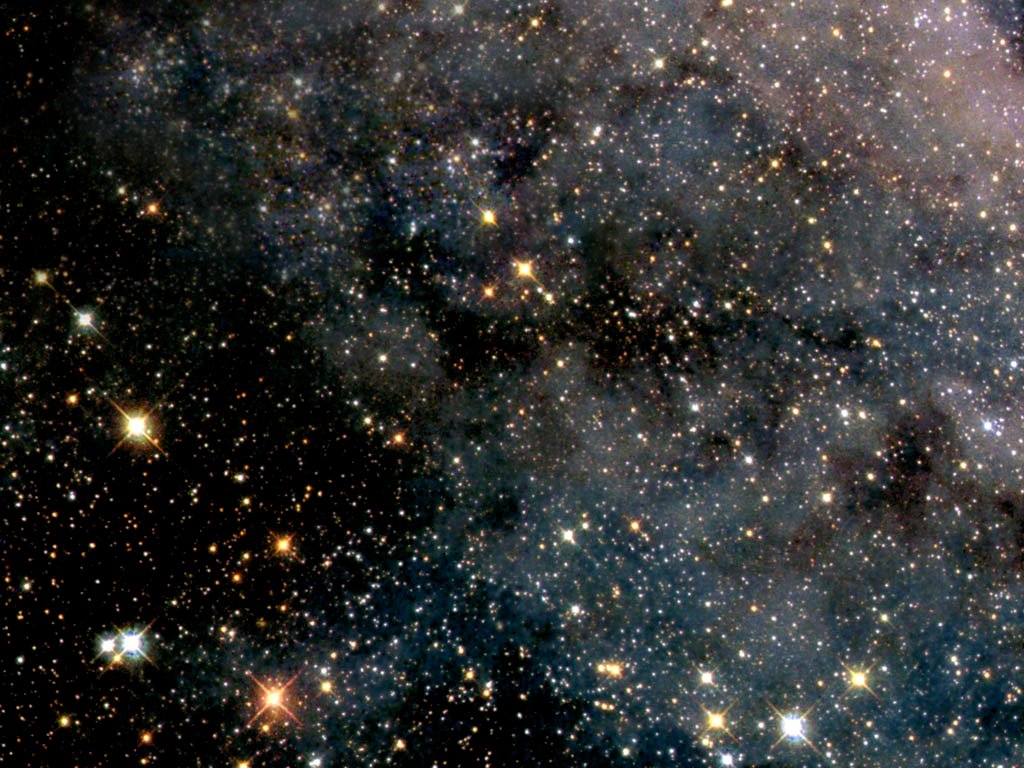
For Aristotle, the existence of the universe needs an explanation, as it could not have come from nothing. There needs to be a cause for the universe. Nothing comes from nothing so since there is something there must have been some other something that is its cause. Aristotle rules out an infinite progression of causes, so that led to the conclusion that there must be a First Cause. Likewise with Motion, there must have been a First Mover.
This argument was given support by modern science with the idea of the universe originating in a BIG BANG, a single event from a single point.
A site with material on this point: http://www.nbcnews.com/id/3077359/#.URO8IWfNnb0
See also Stephen Hawking and the Mind of God for another view
http://infidels.org/library/modern/antony_flew/hawking.html
Thomas Aquinas offered five somewhat similar arguments using ideas of the first mover, first cause, the sustainer, the cause of excellence, the source of harmony
Here is a sample of the pattern:
1. there exists a series of events
2. the series of events exists as caused and not as uncaused(necessary)
3. there must exist the necessary being that is the cause of all contingent being
4. there must exist the necessary being that is the cause of the whole series of beings
First Way: The Argument From Motion
Aquinas had Five Proofs for the Existence of God. Let us consider his First argument, the so-called Argument from Motion. Aquinas begins with an observation:
Of the things we observe, all things have been placed in motion. No thing has placed itself in motion.
Working from the assumption that if a thing is in motion then it has been caused to be in motion by another thing, Aquinas also notes that an infinite chain of things-in-motion and things-causing-things-to-be-in-motion can not be correct. If an infinite chain or regression existed among things-in-motion and things-causing-things-to-be-in-motion then we could not account for the motion we observe. If we move backwards from the things we observe in motion to their cause, and then to that cause of motion within those things that caused motion, and so on, then we could continuing moving backwards ad infinitum. It would be like trying to count all of the points in a line segment, moving from point B to point A. We would never get to point A. Yet point A must exist as we know there is a line segment. Similarly, if the cause-and-effect chain did not have a starting point then we could not account for the motion we observe around us. Since there is motion, the cause and effect chain (accounting for motion) must have had a starting point. We now have a second point:
The cause and effect relationship among things-being-moved and things-moving must have a starting point. At one point in time, the relationship was set in motion. Thus, there must be a First Cause which set all other things in motion.
What else can we know about the First Cause? The first cause must have been uncaused. If it were caused by another thing, then we have not resolved the problem of the infinite regression. So, in order to account for the motion that we observe, it is necessary to posit a beginning to the cause and effect relationship underlying the observed motion. It is also necessary to claim that the First Cause has not been caused by some other thing. It is not set in motion by another entity.
The First Cause is also the Unmoved Mover. The Unmoved Mover is that being whom set all other entities in motion and is the cause of all other beings. For Aquinas, the Unmoved Mover is that which we call God.
For Aquinas the term motion meant not just motion as with billiard balls moving from point A to point B or a thing literally moving from one place to another. Another sense of the term motion is one that appreciates the Aristotelian sense of moving from a state of potentiality towards a state of actuality. When understood in this way, motion reflects the becoming inherent in the world around us. God as First Cause becomes that entity which designed and set in motion all things in their quest to become. In the least, it is a more poetic understanding of motion.
St. Thomas Aquinas (1224-1274) was a theologian, Aristotelian scholar, and philosopher. Called the Doctor Angelicus (the Angelic Doctor,) Aquinas is considered one the greatest Christian philosophers to have ever lived.
Much of St. Thomas's thought is an attempt to understand Christian orthodoxy in terms of Aristotelian philosophy. His five proofs for the existence of God take "as givens" some of Aristotle's assertions concerning being and the principles of being (the study of being and its principles is known as metaphysics within philosophy). Before analyzing further the first of Aquinas' Five Ways, let us examine some of the Aristotelian underpinnings at work within St. Thomas' philosophy.
Aristotle and Aquinas also believed in the importance of the senses and sense data within the knowing process. Aquinas once wrote nothing in the mind that was not first in the senses. Those who place priority upon sense data within the knowing process are known as empiricists. Empirical data is that which can be sensed and typically tested. Unlike Anselm, who was a rationalist, Aquinas will not rely on non-empirical evidence (such as the definition of the term "God" or "perfection") to demonstrate God's existence. St. Thomas will observe the physical world around him and, moving from effect to cause, will try try to explain why things are the way they are. He will assert God as the ultimate Cause of all that is. For Aquinas, the assertion of God as prima causa (first cause) is not so much a blind religious belief but a philosophical and theoretical necessity. God as first cause is at the very heart of St. Thomas' Five Ways and his philosophy in general.
One last notion that is central to St. Thomas' Five Ways is the concept of potentiality and actuality. Aristotle observed that things/substances strive from an incomplete state to a complete state. Things will grow and tend to become as they exist. The more complete a thing is, the better an instance of that thing it is. We have idioms and expressions within our language that reflect this idea. For example, we might say that so-and-so has a lot of potential. We might say that someone is at the peak of their game or that someone is the best at what they do. We might say It just does not get any better than this if we are are having a very enjoyable time. Aristotle alludes to this commonly held intuition when he speaks of organisms moving from a state of potentiality to actuality. When Aquinas speaks of motion within the First Way (the cosmological argument) he is referencing the Aristotelian concepts of potentiality and actuality.
Suggested Reading: Aquinas on God's Existence
Notes on the Five Ways and the associated problems:
http://www.philosophers.co.uk/cafe/rel_two.htm
= = = = = = = = = = = = = = = = = = = = = = =
Argument from Contingency
English theologian and philosopher Samuel Clarke set forth a second variation of the Cosmological Argument, which is considered to be a superior version. It is called the "Argument from Contingency".
Clarke's "Argument from Contingency":
1. Every being that exists is either contingent or necessary.
2. Not every being can be contingent.
3. Therefore, there exists a necessary being on which the contingent beings depend.
4. A necessary being, on which all contingent things depend, is what we mean by "God".
5. Therefore, God exists.
However, there are several weaknesses in the Cosmological Argument, which make it unable to "prove" the existence of God by itself. One is that if it is not possible for a person to conceive of an infinite process of causation, without a beginning, how is it possible for the same individual to conceive of a being that is infinite and without beginning? The idea that causation is not an infinite process is being introduced as a given, without any reasons to show why it could not exist.
Clarke (1675-1729) has offered a version of the Cosmological Argument, which many philosophers consider superior. The "Argument from Contingency" examines how every being must be either necessary or contingent. Since not every being can be contingent, it follow that there must be a necessary being upon which all things depend. This being is God. Even though this method of reasoning may be superior to the traditional Cosmological Argument, it is still not without its weaknesses. One of its weaknesses has been called the "Fallacy of Composition". The form of the mistake is this: Every member of a collection of dependent beings is accounted for by some explanation. Therefore, the collection of dependent beings is accounted for by one explanation. This argument will fail in trying to reason that there is only one first cause or one necessary cause, i.e. one God .
There are those who maintain that there is no sufficient reason to believe that there exists a self existent being.
COUNTER ARGUMENTS:
1. If there is a cause for everything then what caused the first cause (god).
2.If the first cause can be thought to be uncaused and a necessary being existing forever, then why not consider that the universe itself has always existed and shall always exist and go through a never ending cycle of expansion and contraction and then expansion (big bang) again and again!!!
If there is to be a deity that is the exception from the requirement that all existing things need a cause then the same exception can be made for the sum of all energy that exists, considering that it manifests in different forms.
What the counter argument does is to indicate that the premises of the cosmological argument do not necessarily lead to the conclusion that there is a being that is responsible for the creation of the universe.
3) Further, even if a person wanted to accept that there was such a being there is nothing at all in the cosmological argument to indicate that the being would have any of the properties of humans that are projected into the concept of the deity of any particular religion. The first mover or first cause is devoid of any other characteristic.
So the cosmological argument is neither a valid argument in requiring the truth of its conclusion nor is it a satisfactory argument to prove the existence of any being that would have awareness of the existence of the universe or any event within it.
When a person asks questions such as :
1 What is the cause of the the energy or the force or the agent behind the expansion and contraction of the energy?
These questions are considered as "loaded questions" because they loaded or contain assumptions about what exists or is true that have not yet been established. Why is it that the idea of a "force " or agent" is even in the question? Why operate with the assumption that there is such or needs to be such?
We do not know that there is a force "behind" the expansion and contraction. Energy might just expand and contract and there is no force at all other than those generated by the energy-gravitational force, electro magnetic, strong and weak forces.
In another form this is the "who made god?" question or the" who made the energy question?" question. Such an approach to the issue of an explanation for the existence of the universe assumes that there must be an agency. When the idea of an eternal and necessary agency is introduced it was done to provide a form for describing a being that some people wanted as the ultimate explanation- a deity. The point of the counter arguments to the cosmological argument is that the idea of an eternal and necessary agency can as logically be expressed as energy rather than as a single being or entity. If the uncaused cause can be thought of a a single entity then the uncaused cause can be thought of a a single process-energy.
Can there be a Creation without God ? See: http://www.infidels.org/library/modern/mark_vuletic/vacuum.html
Notes on Critiques of this Argument: David Hume’s Critique of the Cosmological Argument
http://www.leaderu.com/offices/koons/docs/lec8.html
CH-3-Documents\ch3-Stengler-on-Origin-math-model.pdf
REBUTTAL to the COSMOLOGICAL ARGUMENT
Nothing can come from nothing is a fairly well accepted principle since Parmenides. In the West it is taken to be used to support the idea that the universe must have had a creator or a maker or source or origin. However, that is due to the prior storied of a creator being that sets the intellectual environment in which thinking takes place. Now in the East and now in the West there are alternative approaches to the explanation of the universe that we experience.
Nothing comes from nothing.
Something does exist.
Therefore, has never been nothing.
It is possible that the something that currently exists has always existed.
The something that exists is always changing.
Change is a feature of something. --Process Philosophy
The East has had such notions for millennium. In the West there are now alternative cosmologies to account for the cosmos--M theory is one of them. A flaw in the cosmological argument is in giving special exclusive status to a deity that would need no creator or origin outside of itself- a necessary being--without acknowledging that such status could be given to the basic stuff, physis, of the universe, its energy, that can take different forms.. What the western thinkers omitted as a possibility was the alternative that there is energy that has always existed and undergoes changes that are time and it can expand and contract and generate multiple dimensions. The Hindus and Buddhists have this sort of idea and so to the Taoists.
If people need to believe that there was an origination for the universe and that the origination involves an eternal entity then you can have several possibilities including these:
1) eternal entity =deity=creator of universe
2) eternal entity=energy=continual existence of energy in various forms undergoing continual change=universe
Outcome Assessment
This argument or proof does not establish the actual existence of a supernatural deity. It attempts to argue for the existence of such a being by making exceptions to rules in the argument and that is not rationally legitimate. While the argument can not be used to convert a non-believer to a believer, the faults in the argument do not prove that there is no god. The Burden of Proof demands that the positive claim that there is a supernatural deity be established by reason and evidence and this argument does not meet that standard. The believer in god can use the argument to establish the mere logical possibility that there is a supernatural deity or at least that it is not irrational to believe in the possibility that there is such a being. The argument does not establish any degree of probability at all when there are alternative explanations for the existence of the known universe.
Abstract: Atheists have tacitly conceded the field to theists in the area of philosophical cosmology, specifically, in the enterprise of explaining why the universe exists. The theistic hypothesis is that the reason the universe exists lies in God's creative choice, but atheists have not proposed any reason why the universe exists. I argue that quantum cosmology proposes such an atheistic reason, namely, that the universe exists because it has an unconditional probability of existing based on a functional law of nature. This law of nature ("the wave function of the universe") is inconsistent with theism and implies that God does not exist. I criticize the claims of Alston, Craig, Deltete and Guy, Oppy and Plantinga that theism is consistent with quantum cosmology.
Proceed to the next section by clicking here: Next Section